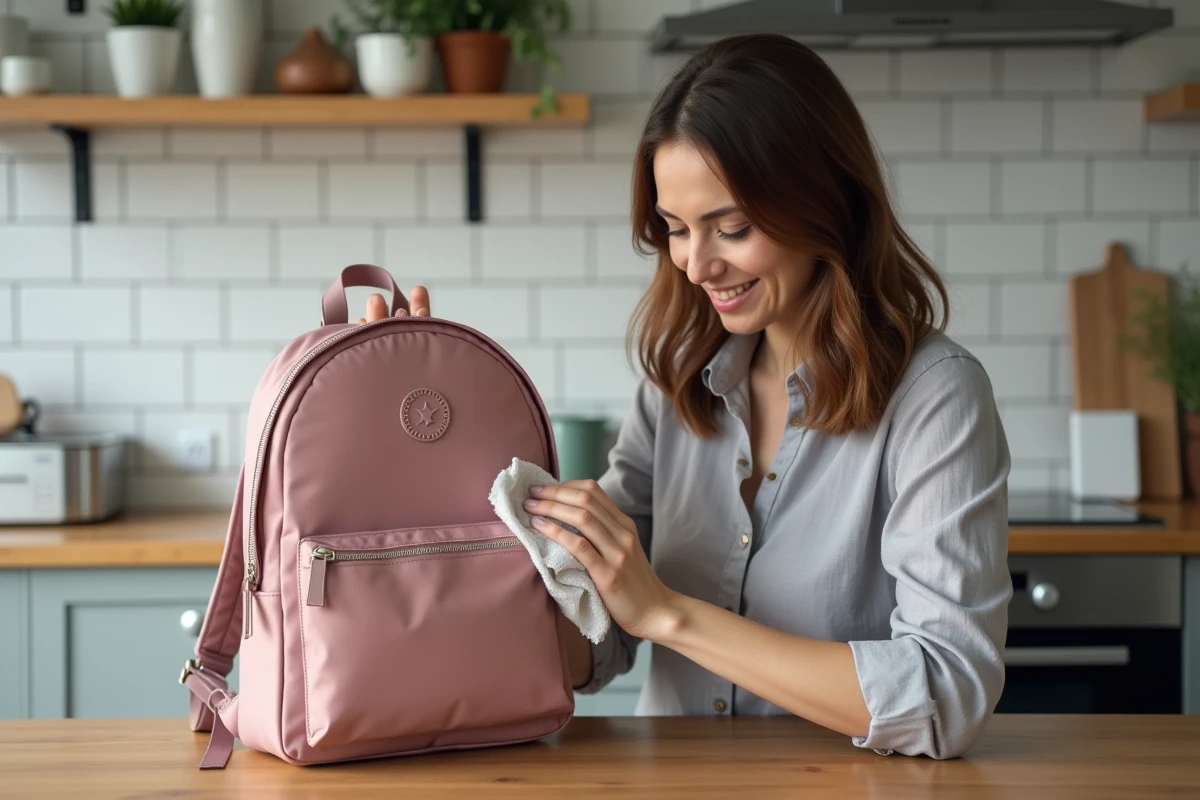
Kipling nylon, whether virgin or recycled, has high mechanical resistance but is genuinely sensitive to aggressive chemical agents and heat. Cleaning a Kipling backpack without damaging it requires understanding this dual nature of the fabric and adapting each action accordingly.
Kipling Hardware: the weak point that cleaning attacks first
Recent series of Kipling backpacks incorporate metal parts with colored or matte finishes (lacquered coatings, fine galvanization) that react poorly to prolonged contact with moisture and detergents. We regularly observe signs of oxidation or premature tarnishing on zippers, buckles, and rivets, even on bags less than a year old.
The basic rule: never spray cleaning product directly on the bag. Apply the product to the cloth, then rub the textile area while avoiding the hardware. If water or soap comes into contact with a metal part, dry immediately with a dry, clean cloth.
Before finding our tips for deep cleaning a backpack, this reflex to protect the metal parts must become automatic with every intervention, even for a simple sponge wipe.
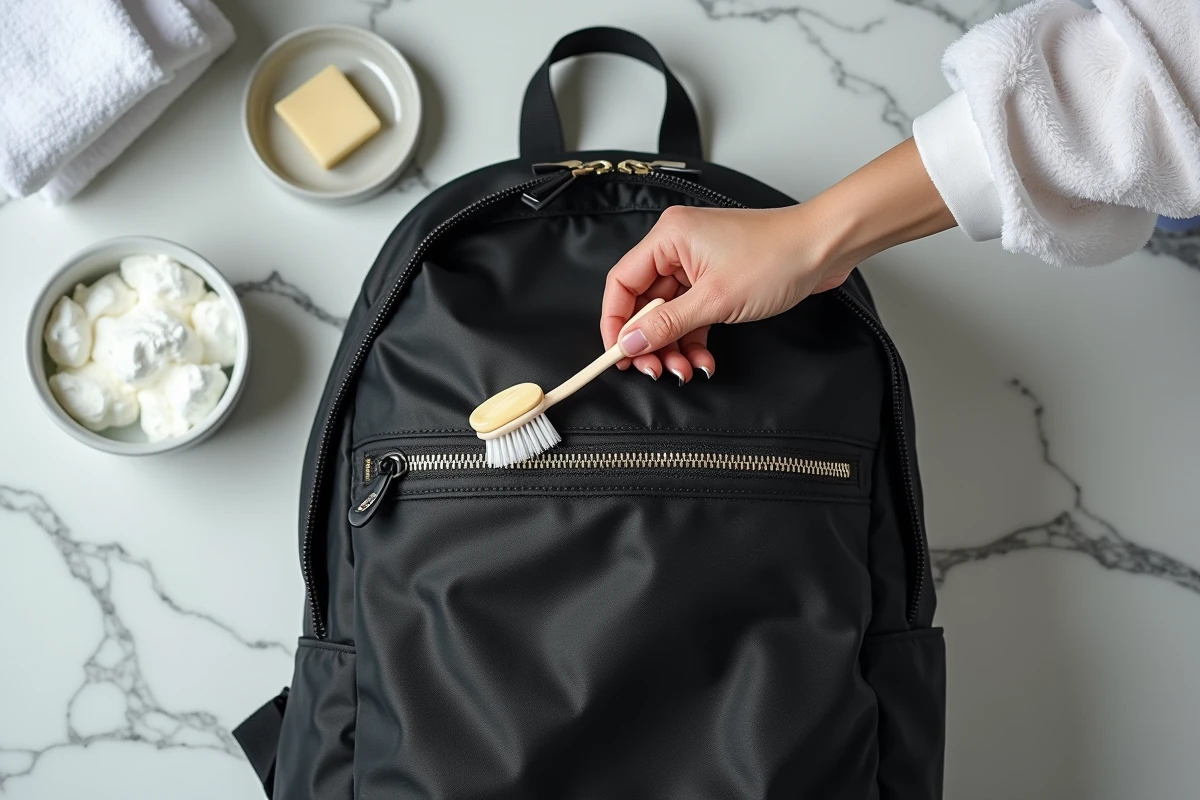
Weekly maintenance of Kipling nylon: the routine that avoids heavy washing
A Kipling nylon backpack withstands light and regular maintenance much better than intensive occasional cleaning. We recommend a weekly routine in four steps.
- Completely empty the backpack, turn the pockets inside out, and vacuum on low power to remove crumbs, dust, and residue from gum
- Wipe the inside and outside with a dry microfiber cloth, without water or product, to eliminate surface dirt
- Leave the backpack open overnight in a ventilated room to air out the fabric and limit odor development
- Immediately treat any fresh micro-stain with a damp cloth and a drop of Marseille soap, without rubbing in wide circles
This routine significantly reduces the frequency of deep cleanings. For a backpack used daily by a child, one to two complete washes per year are sufficient when the weekly maintenance is respected. The fabric and seams are preserved over time.
Ink stain and ballpoint pen on Kipling nylon: stain removal protocol
Ballpoint pen ink stains are a recurring problem on school backpacks. Kipling nylon absorbs the pigment quickly, which requires acting fast and with the right method.
Fresh ballpoint pen ink
Blot the stain (without rubbing) with a cloth soaked in 70° alcohol. The alcohol dissolves the ballpoint ink pigment without attacking the nylon fiber. Repeat with a clean area of the cloth until the ink transfer stops. Then rinse the area with cold water.
Dried or old ink
Never use acetone on Kipling nylon: the solvent attacks the fiber and can cause irreversible whitening. For an old stain, apply a mixture of white vinegar and warm water in equal parts, let it sit for a few minutes, then blot with a clean cloth. The result is less spectacular, but the fabric remains intact.
Other common stains (grass, mud, food): a damp cloth with Marseille soap is sufficient in most cases. Always work from the outside of the stain towards the center to avoid spreading the pigment.
Machine washing a Kipling backpack: real risks for the warranty
Machine washing may result in a refusal of the Kipling warranty. The terms of coverage explicitly state that failure to follow care instructions (damaged seams, discoloration, damaged accessories after machine washing) constitutes grounds for refusal.
If the backpack requires a complete cleaning nonetheless, we recommend hand washing in a basin of warm water with Marseille soap. Immerse the bag turned inside out, gently scrub the dirty areas with a soft-bristled brush, and rinse thoroughly with clear water.
Drying the Kipling backpack after washing
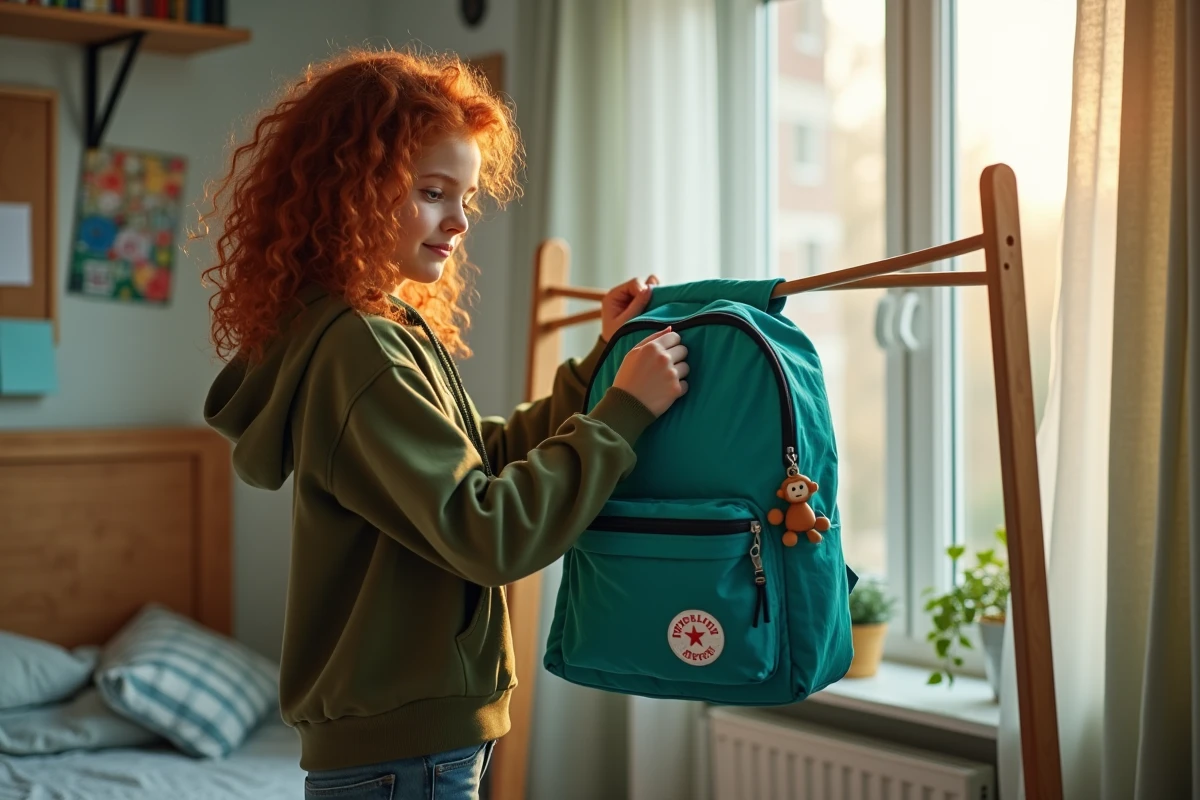
Drying is as crucial for the longevity of the fabric as washing itself. Hang the backpack turned inside out in a shaded area. Direct heat (sun, radiator, dryer) distorts the nylon and weakens the heat-sealed seams. A complete drying usually takes an entire night in a ventilated space.
Never store a still damp backpack: trapped residual moisture in the linings promotes mold and stubborn odors, which are much harder to treat than a simple stain.
Preventive protection of Kipling nylon fabric
A textile waterproofing spray applied at the beginning of the school year limits liquid absorption and facilitates stain removal throughout the year. Spray from a sufficient distance to achieve an even mist, protecting the metal parts with a cloth.
Store the backpack in a dry place during the holidays, preferably with the pockets open and the straps unfolded to avoid permanent creases on the nylon. A well-maintained Kipling backpack retains its mechanical properties and appearance for several school years, making it a worthwhile investment as long as the nature of the material is respected.