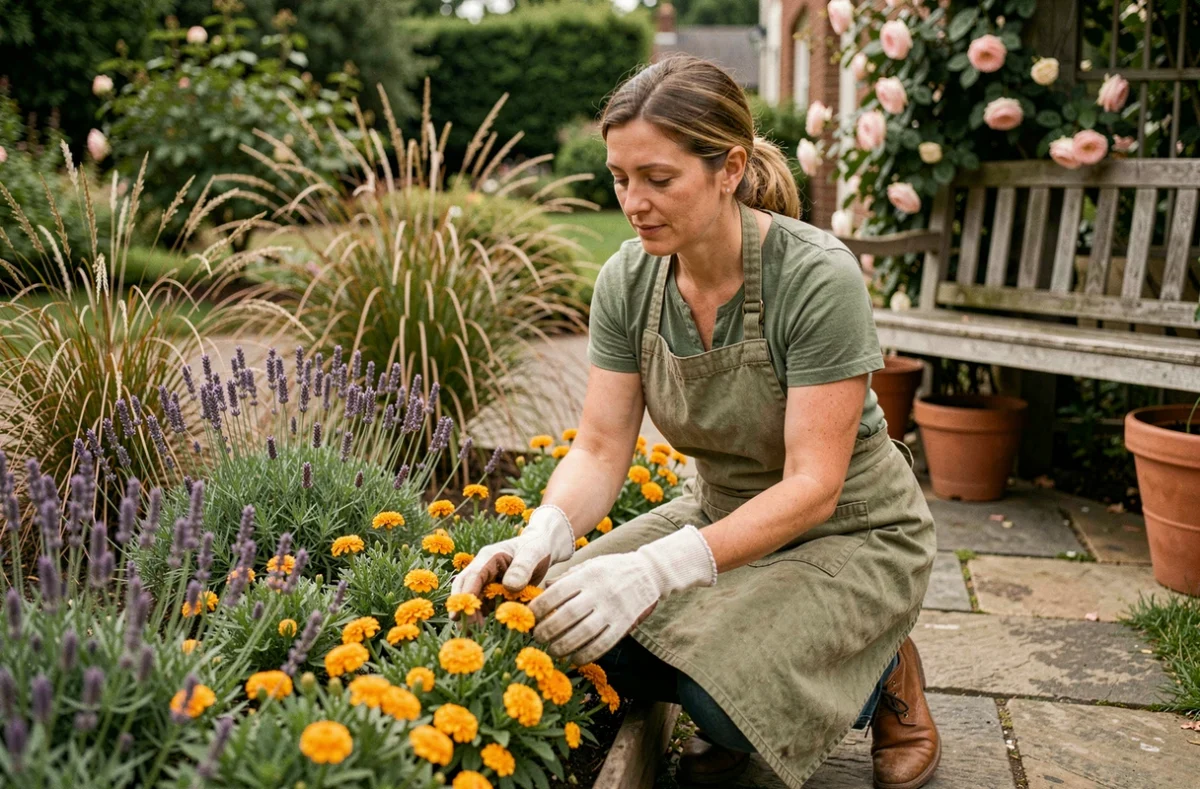
A harmonious garden cannot be designed from a catalogue. It must be tailored to the plot, rainfall patterns, local watering restrictions and available soil volume. Water restrictions vary from one municipality to another, sometimes from one month to the next within the same season. Checking the status for your address on the official VigiEau service before watering is not just a precaution—it is a regulatory requirement.
Local water constraints and garden design
Most landscaping guides recommend watering in the evening to limit evaporation. This is sound agronomic advice, but it overlooks a regulatory factor: permitted watering times and uses depend on the drought level set by local order. Legal watering hours can change during the season as conditions move from watch to alert or emergency status.
Rainwater collected in a tank is sometimes treated as an exception to restrictions, but this exemption is not automatic. Check the order in force in your municipality to find out whether your tank really does allow you to water during a restriction period. Assuming that any water reserve exempts you from checking the rules could result in a fine.
We now design planting plans with these constraints in mind from the outset: plant selection, mulch depth and irrigation method (drip irrigation, olla pots, gravity-fed watering) all depend directly on local water conditions, not aesthetic preference. Resources such as https://www.conseil-au-jardin.fr can help you explore these trade-offs between soil, climate and maintenance.
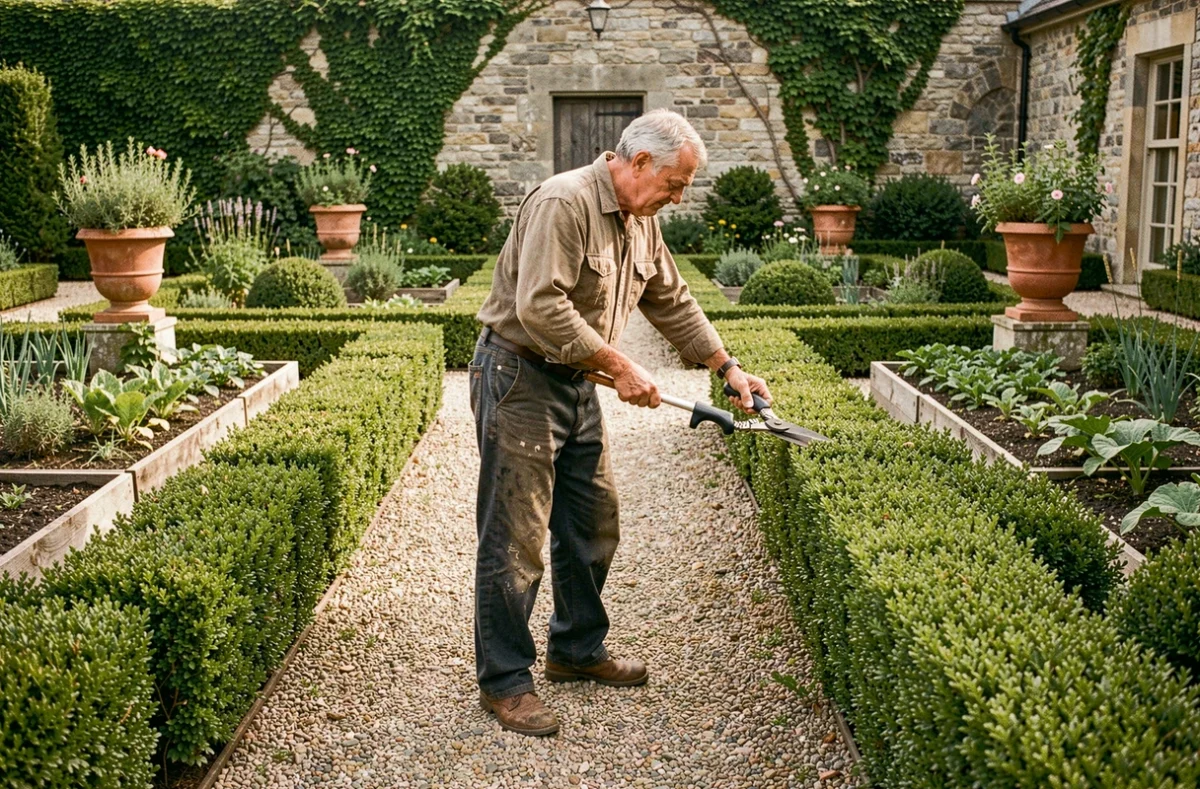
Resilient plant selection: preparing for tomorrow’s climate
Choosing plants based on today’s climate is already outdated. Landscape professionals are beginning to incorporate heat-tolerant southern species alongside local ones. The aim is twofold: to maintain functional plant cover even after a heatwave summer and to spread the risk of disease.
A diverse plant palette protects against a domino effect. If one species is weakened by a pest or disease, the others can continue to structure the garden and feed pollinators. Including three or four different botanical families in the same bed reduces overall vulnerability.
Selection criteria by layer
- Tree layer: choose species with deep roots that can access water below the dry surface layer. Shade from a well-positioned tree lowers ground temperatures by several degrees and reduces the watering needs of lower layers.
- Shrub layer: choose evergreen shrubs with leathery leaves (such as strawberry trees or mastic trees) or deciduous shrubs that recover quickly after water stress. Stagger flowering times to provide nectar throughout the season.
- Ground-cover layer: choose dense, spreading plants that limit soil evaporation and slow runoff during heavy rain. Sedums, creeping thyme and yarrows serve this purpose without summer watering once established.
Shade is a design criterion in its own right, not a side effect. When planting a medium-sized tree, consider how much space it will occupy in ten or fifteen years. On a small plot, a poorly positioned tree can block sunlight from the vegetable garden or patio instead of providing the desired coolness.
Managing runoff and heavy rain in the garden
A resilient garden is designed to cope with heavy rainfall as well as drought. Impermeable surfaces (patios, paved paths, garden sheds) channel runoff towards the lowest points of the plot. Without proper landscaping, water erodes flower beds, exposes the roots of young plants and saturates the soil within minutes.
Three simple features can absorb excess water without major earthworks. A planted swale (a shallow depression planted with grass or moisture-loving perennials) slows the flow and allows water to soak into the ground. A free-draining mineral mulch at the base of a downspout prevents standing water from forming. Uncompacted areas of open soil, even if only a metre wide, act as buffers between two hard surfaces.
On sloping plots, alternating planted strips with permeable paths (stepping stones, stabilised gravel) slows the water down. The principle is the same as for watering: every square metre of living soil reduces reliance on the water supply and limits damage during extreme weather events.
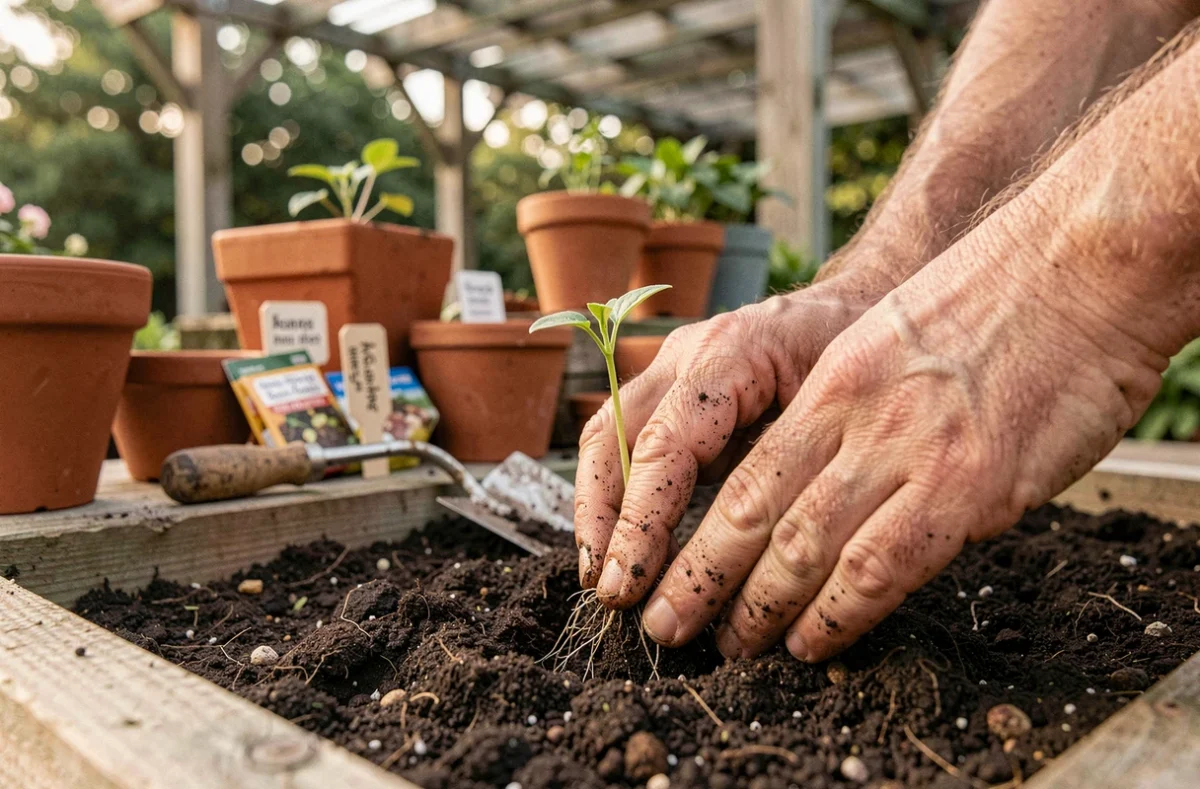
Planting plan for small spaces
A harmonious garden in a small space is not about filling it up; it is about creating depth and structure. Layering plants (a columnar tree, a see-through shrub, low-growing perennials) creates a sense of volume without overwhelming the view. The plan should account for each plant’s mature size to avoid corrective pruning every three months.
Prioritise functions
On a plot of just a few dozen square metres, every plant should serve at least two purposes: providing shade and producing food, covering the ground and limiting runoff, or flowering and supporting pollinators. Purely ornamental plants with no ecological or climate-related role take up space that could be put to better use elsewhere.
Raised beds or square-foot gardening beds work well in small gardens, provided they are placed where they will get the most sunlight. A poorly oriented vegetable garden produces little and eventually gets abandoned, which harms the garden’s visual balance as well as its productivity.
Maintenance in a small space should be kept simple: several centimetres of organic mulch reduce weeding and watering, while a programmable drip-irrigation system prevents waste. We favour locally sourced plants because those grown at a regional nursery acclimatise faster than imported ones.
A harmonious garden is not a static backdrop. It is a living system tailored to the plot’s real constraints: water availability, exposure, area and soil. The choices made at planting time determine the maintenance workload for the next ten years. It is better to plant less, choose well and let the garden fill out at its own pace.