
A variant that advances silently can change the game overnight, especially for those who believe they are safe. Children, long considered mere “healthy carriers,” find themselves on the front lines against Covid 2026. Even before showing any symptoms, some are already transmitting the variant, and rapid tests are proving less reliable than before. The signals are getting muddled: new symptoms are emerging, while others are taking a back seat. The benchmarks are changing, as are the recommendations, as new data comes in.
New Covid 2026 variant: what we know about its impact on children
Since autumn 2025, the Frankenstein variant (XFG) has baffled all specialists. This sub-variant of SARS-CoV-2, resulting from the crossover of alpha, delta, and omicron strains, has risen to the top in France and caused a 37% surge in infections in just one week. Children, once less affected, are now at the heart of this outbreak, particularly with BA.3.2 (Cicada), which is now predominant among those under twenty, according to the latest data from the Institut Pasteur.
This Frankenstein variant disrupts the situation. Among the youngest, doctors are seeing unexpected clinical pictures emerge: digestive disorders take precedence, skin rashes (erythema, urticaria) are added, and the onset of wheezing at night is beginning to seriously worry pediatricians. Curiously, fever and cough sometimes take a back seat, blurring the line with other infections like the flu or asthma.
To help families identify the illness, here are the most frequently observed signs in recent months:
- Digestive symptoms: diarrhea, vomiting
- Skin rashes
- Nocturnal wheezing
- Fatigue and feverishness, sometimes barely noticeable
Schools and daycare centers are at the top of the hotspots identified by Santé publique France. Severe cases rarely affect children without prior health issues, but vigilance remains crucial, especially with the specter of long Covid and complications that are not spectacular but persistent. To better understand the symptoms of the new Covid 2026, professionals are cross-referencing PCR tests, sequencing, and wastewater analyses to track the actual circulation of the virus.
Symptoms to watch for: how to recognize an infection in a child?
This unprecedented variant blurs the usual symptoms in children. While fever, cough, and fatigue may sometimes persist, other signals are now dominating pediatricians’ attention. Among the most visible: digestive disorders (diarrhea, vomiting, abdominal pain), red patches, urticaria, and especially this wheezing that occurs at night and is regularly reported by parents. Doctors remain concerned about the frequency of this last symptom.
Differentiating between the flu, RSV, or an asthma attack proves challenging. Often, parents notice that their child “is not like usual”: lack of appetite, irritability, fatigue, or complicated nights. Fever may be very mild or even absent. In very young children, refusing the bottle or crying constantly can also be a warning sign.
To avoid missing an infection, here is a concrete summary of the manifestations that should raise concern:
- Fever (subtle or absent depending on the case)
- Digestive disorders (diarrhea, vomiting, abdominal pain)
- Skin rashes (patches, urticaria…)
- Nocturnal wheezing
- Unusual fatigue, loss of appetite, drowsiness
Cases of long Covid are concerning: in rare situations, a child remains exhausted, struggles to concentrate, or has headaches for several weeks, especially if digestive issues persist or breathing is disturbed during the night. Early recognition of these signals paves the way for appropriate care.
In case of doubt or concern: the right reflexes to protect your child
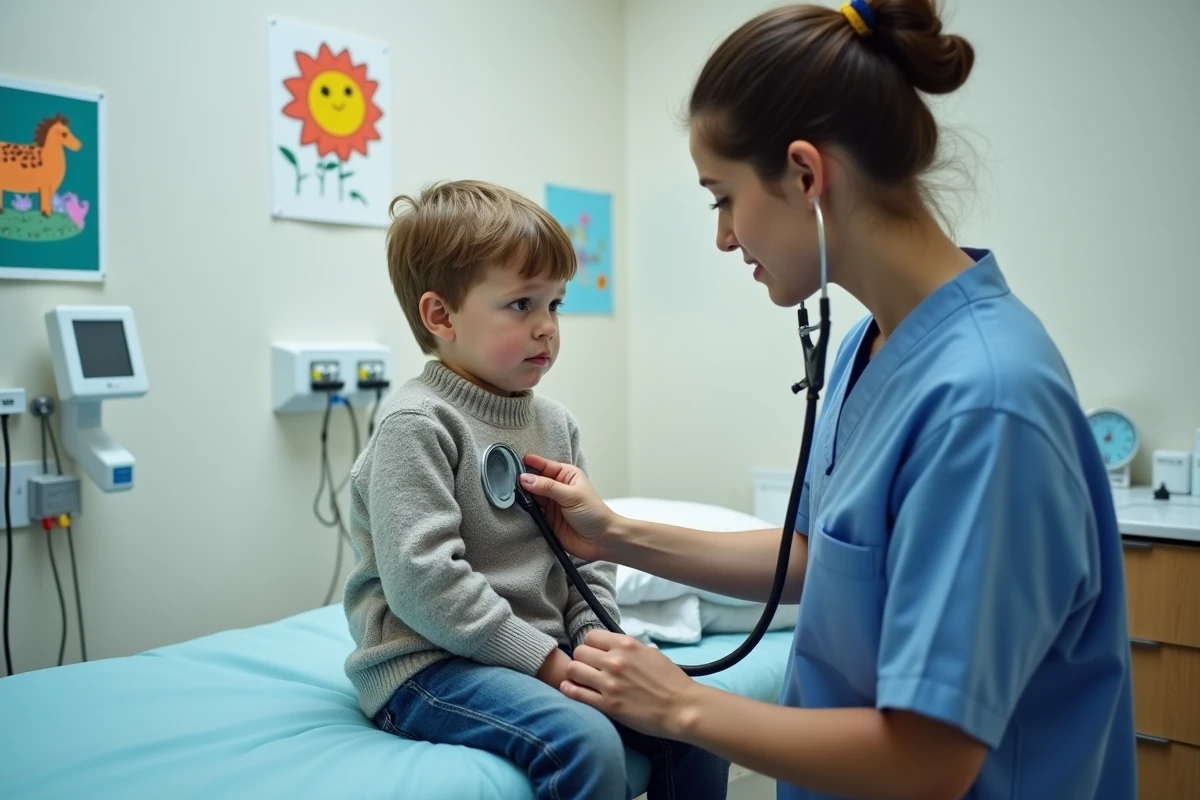
In light of the rapid emergence of the Frankenstein variant, instinct takes precedence: at the slightest unusual alert, it is better to act without delay. Noisy breathing at night, persistent fever, or repeated vomiting all warrant an immediate response. A doctor should be consulted without delay if the general condition deteriorates sharply, if fever persists beyond 48 hours, or in cases of signs of dehydration or respiratory distress.
The speed of the virus’s spread in communal settings necessitates limiting contacts and ventilating more frequently. Also, consider regular handwashing, wearing masks for older children, and temporarily isolating the young sick child to break the transmission chain. For younger children, no masks, but limit close interactions with symptomatic adults.
For those living with vulnerable individuals or during pregnancy, vaccination and boosters are recommended: they provide an extra layer of protection with updated versions. The PCR test remains the reference tool for detecting a recent infection, and sequencing can refine the identification of the variant. If the situation evolves or uncertainty remains, a visit to the pediatrician is essential.
To stay vigilant in daily life, it is recommended to adopt the following reflexes:
- Carefully observe sleep, appetite, and behavior
- Never ignore the occurrence of nocturnal wheezing
- Continuing breastfeeding, if possible, further strengthens natural defenses
Covid 2026 reshuffles the cards: the signals are no longer the same, and caution must be exercised even where one thought they were immune. In the face of this discreet enemy, attention to the smallest detail often makes the difference.