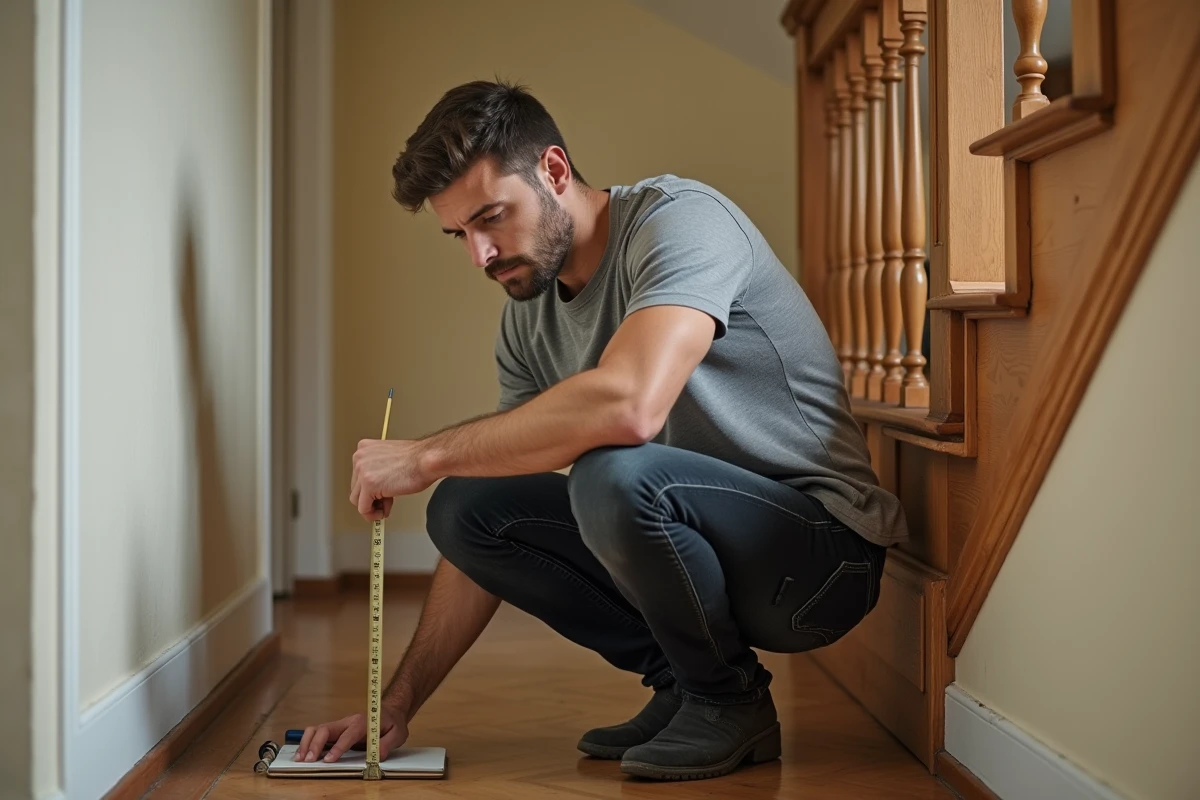
Moving a sofa, a wardrobe, or a sideboard to an upper floor creates a very specific tension: the doubt about the dimensions. The question of whether a piece of furniture can fit through the stairs cannot be resolved solely with a tape measure and the product specifications. The actual passage depends on the trajectory that the furniture must follow, the angles of rotation imposed by the landings, and the specific geometry of each flight.
Actual trajectory in the stairs: the measurement that everyone forgets
Most guides focus on the width of the passage and the height under the ceiling. These two dimensions matter, but they are not enough. Moving professionals increasingly emphasize the concept of actual trajectory in the stairs, meaning the three-dimensional path that the furniture actually takes between the bottom and the top.
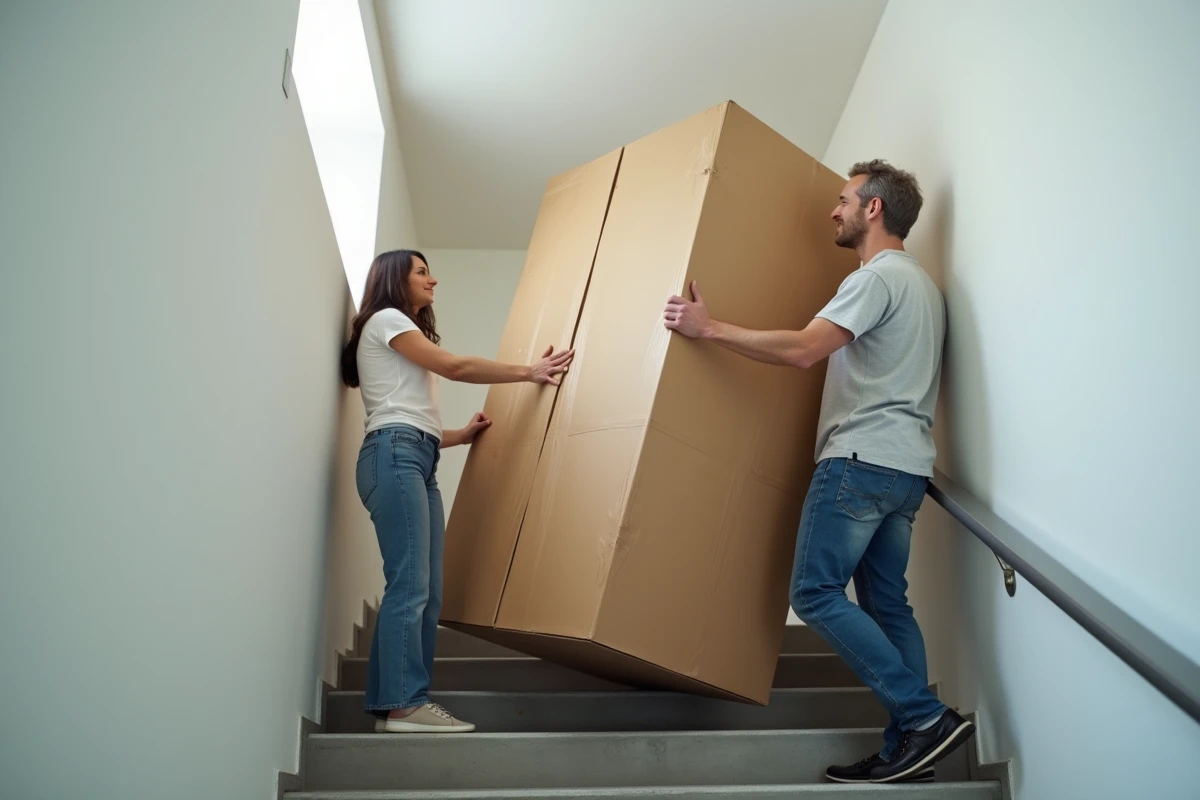
A straight staircase with an intermediate landing requires the furniture to rotate at each change of direction. A spiral staircase, on the other hand, requires continuous rotation with a radius that decreases as one approaches the central core. In both cases, the diagonal of the furniture (its largest dimension in overhang) can block the passage even if the raw width of the staircase seems sufficient.
The reflex to adopt: simulate the complete movement of the furniture before lifting it. Take a cardboard cutout to the dimensions of the widest face of the furniture and rotate it at each turn. If the cardboard gets stuck, the furniture will too. Knowing how to determine if a piece of furniture fits in a staircase relies as much on this physical simulation as on the raw measurements.
Measuring a turning or spiral staircase: critical points
On a turning staircase, three areas often pose problems more than the rest of the route.
- The rotation landing (or quarter-turn): this is where the furniture must pivot. Measure the free diagonal of the landing, not just its width. A square landing one meter on each side offers a diagonal of about 1.40 m, which changes the game for a three-seater sofa.
- The height at the lowest point of the sloping ceiling: in many old buildings, the underside of the upper flight descends above the landing. Measure the height at the precise spot where you will need to tilt the furniture to turn.
- The handrail and the balusters: they reduce the usable width of the passage. Check if the handrail can be temporarily removed, as these few centimeters gained can sometimes unblock the situation.
For a spiral staircase, the inner radius is the limiting factor. Rigid furniture whose smallest dimension exceeds this radius simply will not pass, regardless of the carrier’s skill.
Case of stairwells in old buildings
Haussmannian buildings or those constructed before the 1960s often have narrower stairwells than recent constructions. The steps may be higher, and the landings shorter. The sloping ceiling above the landing is the most common trap in these configurations. Before any bulky purchase, a precise measurement of this area avoids costly returns.
Tilting, pivoting, disassembling: the three options for a tight passage
When the measurements reveal a borderline passage, three strategies are available to you, in order of simplicity.
The first is to tilt the furniture on its narrowest edge. A sofa placed on its side sometimes loses half of its apparent depth. This technique works well in straight staircases but becomes risky in turns where the tilted furniture can scratch the walls or strain the structure.
The second option is gradual pivoting. The furniture moves up the stairs by turning slightly at each step, like a screw in its thread. This method requires at least two people and carrying straps to control the load. Moving straps distribute the weight on the shoulders and free the hands to guide the furniture in the turns.
The third solution, often underestimated, remains partial disassembly. Many contemporary pieces of furniture (wardrobes, bookshelves, beds) are designed to be assembled on-site. Removing the legs from a sofa gains several centimeters in height. Unscrewing the doors from a wardrobe reduces the depth. A partially disassembled piece of furniture passes where the whole piece blocks.

Surface protection and safety during the passage
Moving a bulky piece of furniture through a staircase exposes the walls, steps, and the furniture itself to repeated impacts. Moving blankets wrapped around the corners of the furniture absorb the shocks. Corrugated cardboard secured with tape on the corners of walls protects painted surfaces or wallpaper.
For wooden steps, rigid protective plates placed on the nosing prevent chipping. This detail is particularly important in rental properties, where damage to common areas can lead to deductions from the security deposit.
When to call a furniture lift
If the furniture definitely does not fit through the stairs, passing through the window via a furniture lift remains an alternative. This solution mainly concerns large and rigid items (upright pianos, non-disassemblable corner sofas, American refrigerators). The cost depends on the height of intervention and the accessibility of the facade. In narrow streets or pedestrian areas, a parking permit from the town hall is usually required.
Before booking a furniture lift, check that the arrival window is wide enough and that its opening allows the furniture to pass. A fixed frame or a casement window can block the operation just as much as a staircase that is too narrow.
The choice between stairs and a furniture lift is often decided by comparing the cost of the service with the risk of damaging the furniture or the building. A damaged piece of furniture in a staircase costs more to replace than passing through the window. Taking ten minutes to simulate the trajectory with a cardboard template remains the most cost-effective precaution before any handling.