
The Cessna 172B, vintage 1961, shares its basic airframe with more recent 172 models, but its original configuration (Continental O-300-D engine, fixed-pitch McCauley propeller, analog instrumentation) generates specific maintenance constraints that generic budget grids do not capture. Mastering the maintenance budget for this aircraft first requires identifying each installed component and its own tracking regime.
Installed Configuration and Impact on Cessna 172B Cost Estimation
The model year alone is not enough to determine maintenance costs. The Cessna maintenance manual specifies that the intervals and life limits depend on the parts actually installed. On a 172B, non-Cessna components (instruments, radio, modified nose gear via STC) must follow their own maintenance data, complicating planning.
We recommend creating a comprehensive inventory before any cost estimation: airframe, engine, propeller, avionics equipment, approved modifications (STC). Each line of this inventory has its own revision schedule, its own parts supplier, and sometimes its own approved workshop. Confusing these lines leads to underestimating the actual budget by several thousand euros per year.
On an aircraft over sixty years old, accumulated modifications can be numerous. A realistic maintenance budget for a Cessna 172B incorporates each of these layers, not just the airframe and original powerplant.
Airworthiness Directives: A Recurring Item to Budget For
Airworthiness Directives (AD) are not one-time recalls. For the affected Cessna 172s, FAA AD 2011-10-09 mandates repetitive inspections of the seat rails, rollers, and locking devices, at most every 100 flight hours or 12 months. Each intervention must note the method applied and the next due date in the tracking file.
This type of directive accumulates with other ADs issued over the decades. On a 172B, the total number of applicable directives can be significant, and each has a cost in labor and sometimes in parts. Budgeting an annual amount dedicated to ADs is wiser than treating them as unforeseen expenses.
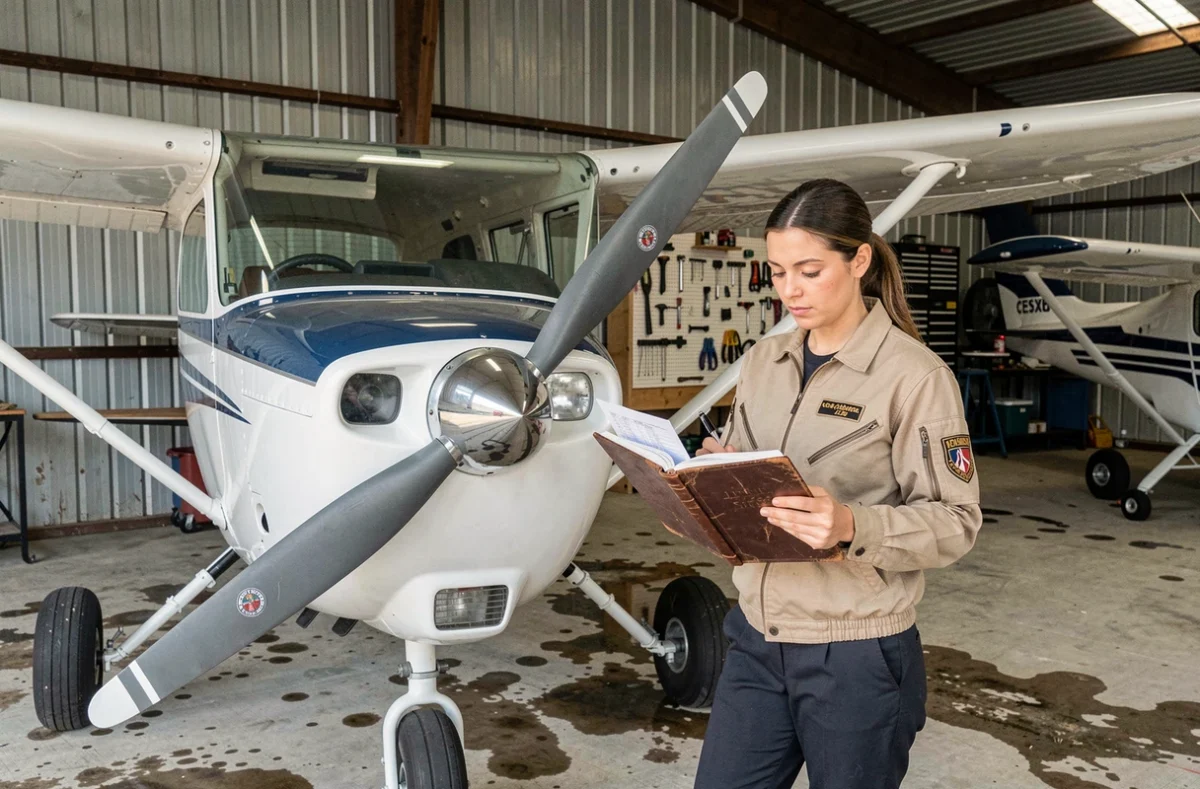
Documentary tracking is equally critical. An incomplete or poorly maintained airworthiness file can block the sale of the aircraft or lead to a suspension of its certificate. On an older aircraft, reconstructing a patchy history can be costly in research and additional inspections.
Corrosion and Aging: The True Variable Cost of the Cessna 172B
On an aircraft of this generation, corrosion can weigh more than scheduled maintenance. Sensitive areas are well-known: spars, wing attachments, cabin floor, engine compartment. An annual inspection may reveal a minor issue like a panel needing treatment, or a structural replacement that alone consumes the entire budget for the year.
The aging of electrical harnesses, hydraulic hoses, and windshield seals also falls into this category. These elements are not always covered by the manual intervals, but their degradation is inevitable on an aircraft that is over half a century old.
We observe that owners who fly regularly detect these issues earlier. A 172B that remains in the hangar for several months accumulates condensation and dormant corrosion. The paradox of the maintenance budget is that an aircraft that flies little does not necessarily cost less to maintain.
Operational Events Triggering Off-Schedule Inspections
The Cessna manual provides for specific inspections after certain events:
- Hard landing or overload, requiring a check of the landing gear, airframe, and engine attachments.
- Engine overspeed exceeding the limits of the Continental O-300-D, possibly necessitating opening the cowling for internal inspection.
- Encountering severe turbulence or lightning strike, requiring a complete visual inspection of the structure and control surfaces.
Budgeting a financial reserve for these exceptional checks is more relevant than a simple “annual visit” budget. A single hard landing can trigger a bill equivalent to several months of regular provisioning.
Spare Parts for Cessna 172B: Availability and Trade-offs
The availability of original parts for a 1961 model decreases each year. Some components specific to the 172B (main switch, cabin ventilation outlets) can still be found with specialized dealers in used or refurbished parts, but lead times may extend.
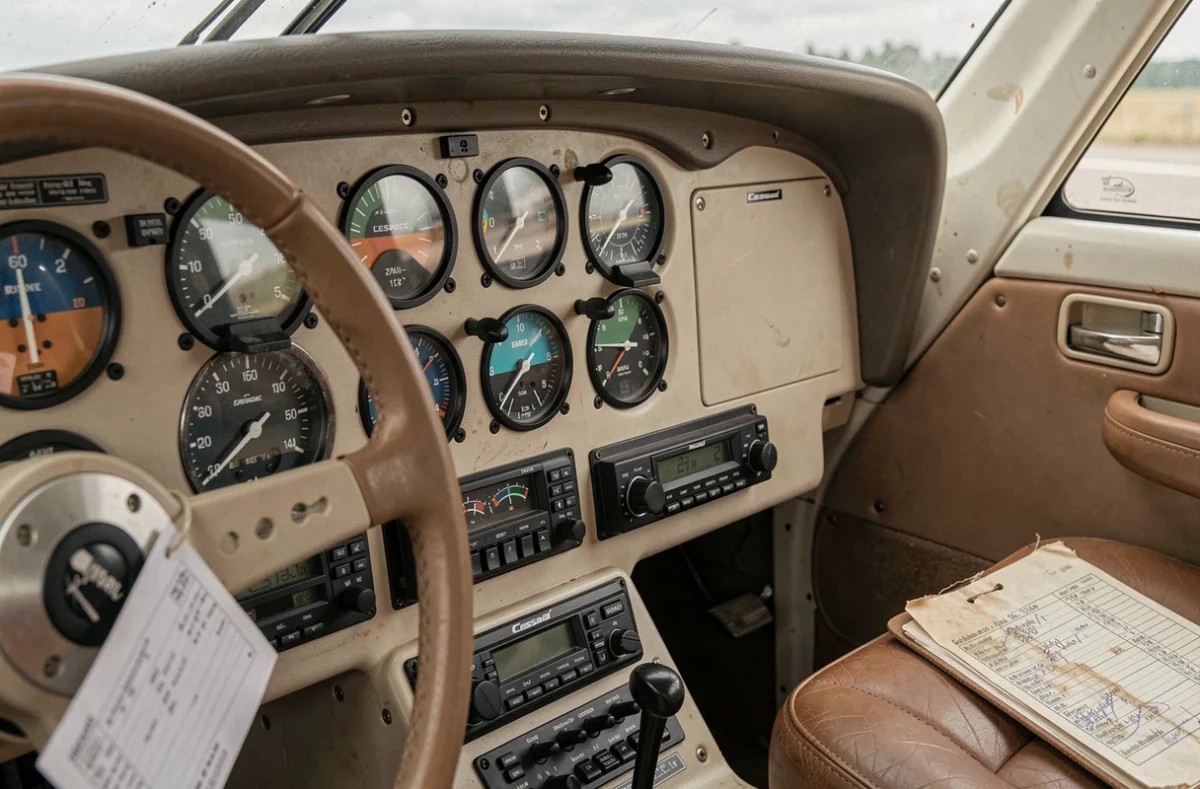
The trade-off between inspected used parts, certified refurbished parts, and PMA (Parts Manufacturer Approval) manufacturing is a recurring choice. Each option impacts immediate cost and documentary traceability. A cheaper component but poorly documented can block a future resale or pose a problem during an airworthiness audit.
For the Continental O-300-D engine, the situation is similar: workshops capable of overhauling this powerplant are becoming rarer. Skilled labor on these older engines generally costs more per hour than on a more common Lycoming O-320. This additional cost must be included in any serious budget projection.
Structuring a Realistic Annual Budget for Your 172B
A credible maintenance budget is divided into three distinct envelopes:
- Scheduled maintenance: annual visit, 100-hour visit (if applicable to the flight regime), oil changes, filters, spark plugs, lubrication.
- Recurring airworthiness directives: AD inspections on a calendar or hourly basis, with their associated labor and parts costs.
- Reserve for unforeseen expenses: corrosion discovered during inspection, operational event, replacement of aging components outside the cycle.
The reserve for unforeseen expenses is often the most underestimated item by first-time owners. On an older aircraft, it should be at least equivalent to the cost of the annual scheduled maintenance, or even higher in the first years of ownership if the documentary history is incomplete.
Insurance, hangaring, and fuel do not fall under strict maintenance, but they interact with it. A heated hangar reduces corrosion. Appropriate insurance covers certain restoration costs after an incident. These items deserve to be considered together, not in silos.
The 172B remains a robust and enjoyable aircraft to fly, but its longevity comes at a price. Those who budget correctly for the triple envelope (scheduled, AD, unforeseen) and maintain a rigorous airworthiness file fly with peace of mind, without unpleasant surprises at certificate renewal.