
A wireless switch is a device made up of two distinct elements: a transmitter (the wall button) and a receiver (a micromodule connected to the light fixture or the electrical panel). The transmitter sends a radio signal to the receiver, which switches the lighting circuit. This architecture allows for the addition of a control point without running cables or digging into a wall.
Receiver and transmitter: the technical distinction that conditions the entire project
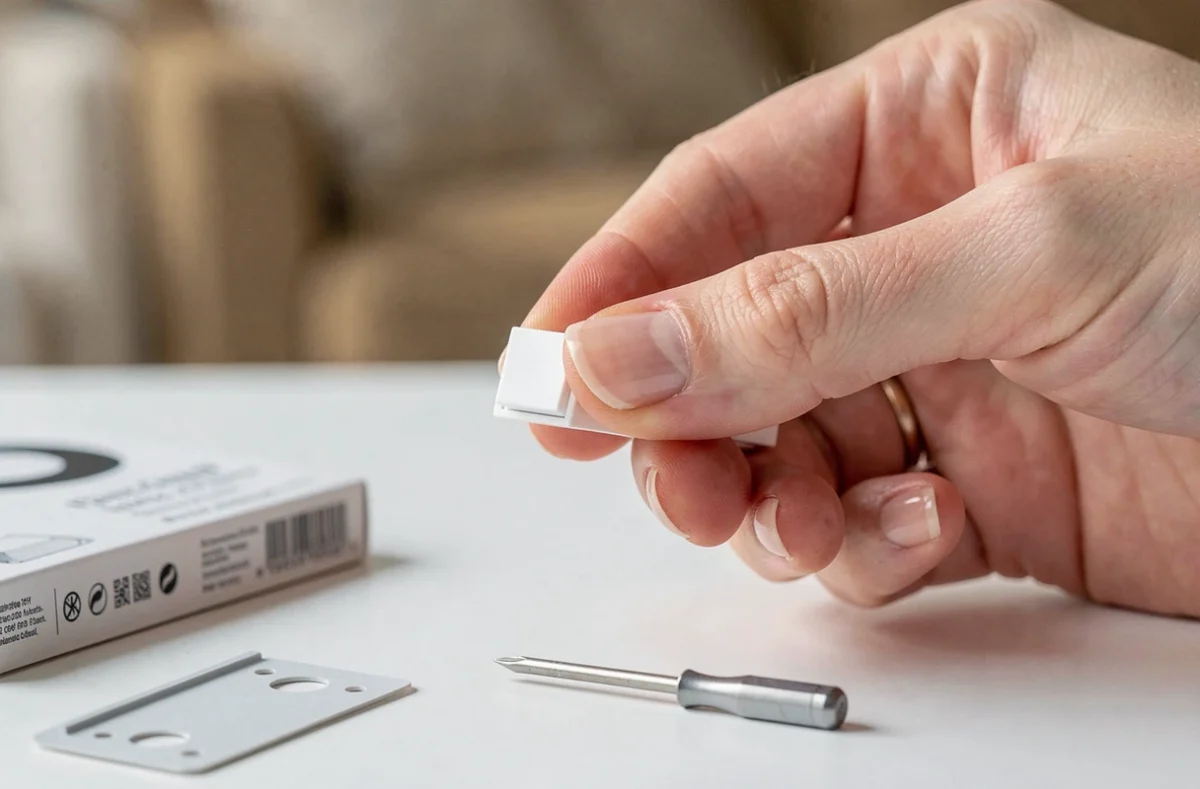
The most common confusion is thinking that the wireless switch is simply applied like a sticker and that everything is set. The visible part, the wall transmitter, is indeed easy to attach: double-sided adhesive or two screws are sufficient. No special electrical skills are required for this step.
The receiver, on the other hand, requires intervention on the existing circuit. This lighting micromodule connects to the wires of the light fixture (often in the DCL box in the ceiling) or is housed behind an existing switch. It is necessary to identify the phase, neutral, and lamp return, and then wire the module to the correct terminals. An error in identifying phase and neutral can damage the module or create a fault in the circuit.
Some kits on the French market operate without neutral at the receiver level, which simplifies the connection in older installations where neutral is not always present in the junction box. Others require a neutral. Checking the compatibility of the kit with the existing wiring is a prerequisite, and you can read on Inside Out for useful additional information on common scenarios.
Power supply of the wireless transmitter: battery, no battery, or kinetic
The choice of transmitter type has practical consequences that are often underestimated. Three technologies coexist on the market.
- Battery models (generally CR2032) are the most common. The battery is not always included in the kit, and its lifespan varies depending on usage frequency. For a switch placed high up or in a hard-to-reach location, periodic replacement becomes a real constraint.
- So-called “battery-free” models harness the kinetic energy produced by pressing the button. They require no external power source, but user feedback reports variable results depending on the brands. The internal piezoelectric or electromagnetic mechanism must generate enough energy to transmit the radio signal, which is not always reliable across all products.
- Some connected transmitters incorporate a rechargeable battery, often via micro-USB. This format is more common in high-end home automation ranges.
Checking the power supply mode of the transmitter before purchase avoids unpleasant surprises, especially in a rental property where maintenance should remain minimal.
Radio range and building constraints: a parameter rarely reliable on the packaging
Manufacturers announce ranges in free field, meaning without obstacles between the transmitter and receiver. In a home, concrete walls, metal partitions, or underfloor heating with mesh significantly reduce this range. The announced range corresponds to ideal conditions, not to actual use.
A transmitter placed in a room separated from the receiver by two concrete partitions may lose the signal or only function intermittently. Before fixing the switch to the wall, testing the operation at the intended location (without permanently fixing it) allows for validating the effective range.
Older buildings with thick stone walls pose more problems than newer constructions with wooden frames or drywall. This parameter is rarely mentioned in the installation guides provided with the kits.
Installing a wireless switch without an electrician: the conditions to be met
Complete installation without professional intervention is realistic in a specific case: the lighting circuit already exists and functions normally. The light fixture is powered, a wired switch already controls the lamp, and the project involves adding a second control point (a wireless two-way switch, for example).
In this configuration, the receiver connects to the existing circuit by cutting the power at the circuit breaker. The wiring steps remain accessible to someone capable of identifying the conductors in a junction box or a DCL box.
However, calling an electrician becomes relevant in several situations:
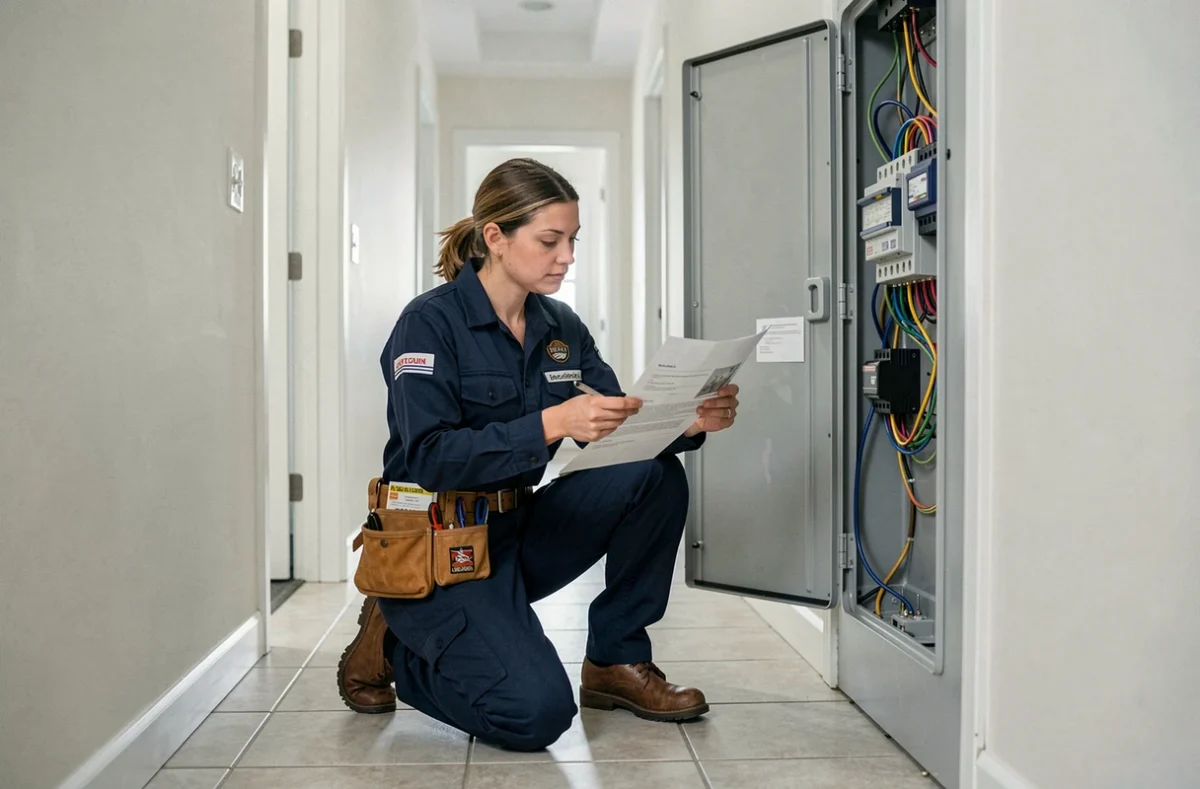
- The electrical panel does not have 30 mA differential protection on the relevant circuit, which the NF C 15-100 standard requires for lighting circuits.
- The existing wiring is outdated (cloth wires, absence of a ground conductor, non-compliant box), and any intervention on this circuit requires bringing the modified part into compliance.
- The project involves creating a new circuit, not just adding a control to an existing circuit.
- Identifying the conductors (phase, neutral, lamp return) is not possible visually, for example, in the absence of standardized color coding.
Compatibility with the type of lamp
Not all wireless receivers support all loads. A micromodule designed for low-power LED lamps may not work properly with a halogen fixture or a dimmer. Checking the compatibility of the receiver with the power and type of lamp installed prevents flickering or premature failures of the module.
The installation of a wireless switch remains one of the few electrical projects that can be carried out without specific qualifications, provided that the existing circuit is sound and properly protected. The point of caution focuses on the receiver, not on the wall switch. If the existing wiring raises any doubts, a diagnosis by a professional costs less than a burnt module or an undetected insulation fault.