On a catamaran, the deck is wide, the wind is lateral, and the stability of the boat does not protect against spray or temperature variations within a few hours. The choice of clothing for a catamaran outing is based on specific technical constraints: prolonged sun exposure, contact with saltwater, and constant wind even in warm weather. These parameters change depending on whether the sailing lasts half a day or several days, and according to the climatic zone.
Technical fabrics and catamarans: how fabric affects navigation
Most clothing guides for boating talk about layering. Before stacking, the question of material should be addressed first. An unsuitable fabric renders any layering system ineffective.
Cotton, instinctively worn in summer, poses a real problem on a catamaran: it absorbs water (spray, sweat) and dries slowly. On a wind-exposed deck, a wet cotton t-shirt cools the body much faster than a synthetic top. Polyester or polyamide fibers wick moisture away and dry in a fraction of the time. For choosing your outfit for the catamaran, this quick-drying criterion takes precedence over aesthetics.
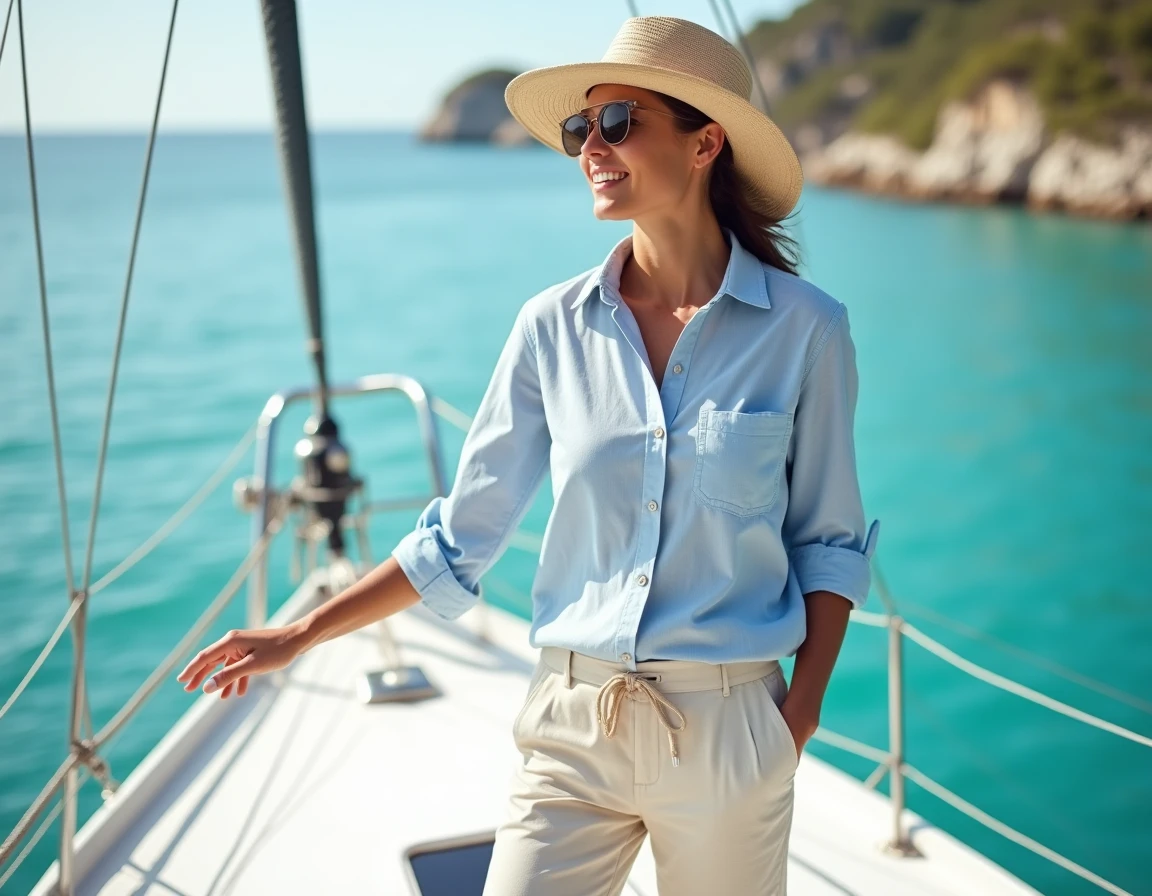
Linen, often seen in “boat” fashion inspirations on social media, offers good thermal comfort at the dock but wrinkles at the first contact with water and loses its shape. It is suitable for an aperitif at the port, much less so for active sailing where splashes are frequent.
A quick-drying garment protects better than a thick garment. This is the basic principle, applicable to both tops and bottoms as well as underwear.
Sun protection on a catamaran: UV clothing or sunscreen
On a catamaran, the reflection of the water amplifies exposure to ultraviolet rays. The wide deck, without a closed cabin on sport or short-term rental models, leaves little shade. The question of choosing between textile protection and sunscreen is more acute than on land.
UV-protective clothing (lycras, rashguards) covers a fixed area without the need for reapplication. Their protection does not diminish with sweat or contact with water, unlike sunscreen which must be reapplied regularly. For the arms and torso, a long-sleeved UV top remains the most reliable solution for outings lasting several hours.
- A long-sleeved lycra protects the torso, arms, and neck without overheating thanks to breathable fabrics
- A wide-brimmed hat or a cap with a neck flap covers areas not protected by the top
- Sunglasses with a cord prevent them from being lost overboard, which happens more often than one might think on a catamaran
- Sunscreen remains necessary for the face, hands, and feet, areas rarely covered by clothing
The combination of UV clothing plus sunscreen on exposed areas offers the best coverage on a catamaran. Relying solely on sunscreen, especially in strong winds that give a false sense of coolness, often leads to severe sunburns.
Shoes for the catamaran: soles, grip, and going barefoot
Navigating barefoot is tempting on a catamaran. The deck is often non-slip, and the feeling of freedom is part of the enjoyment. However, certain situations make shoes necessary: maneuvers with ropes on the ground, the front trampoline of the catamaran where the net can be abrasive, or simply a deck heated by the sun in the middle of summer.
Non-marking and non-slip shoes are the standard in sailing. Lightweight, draining neoprene water shoes represent a good compromise: they protect the foot, grip the wet deck, and are easy to store.
What to avoid on board
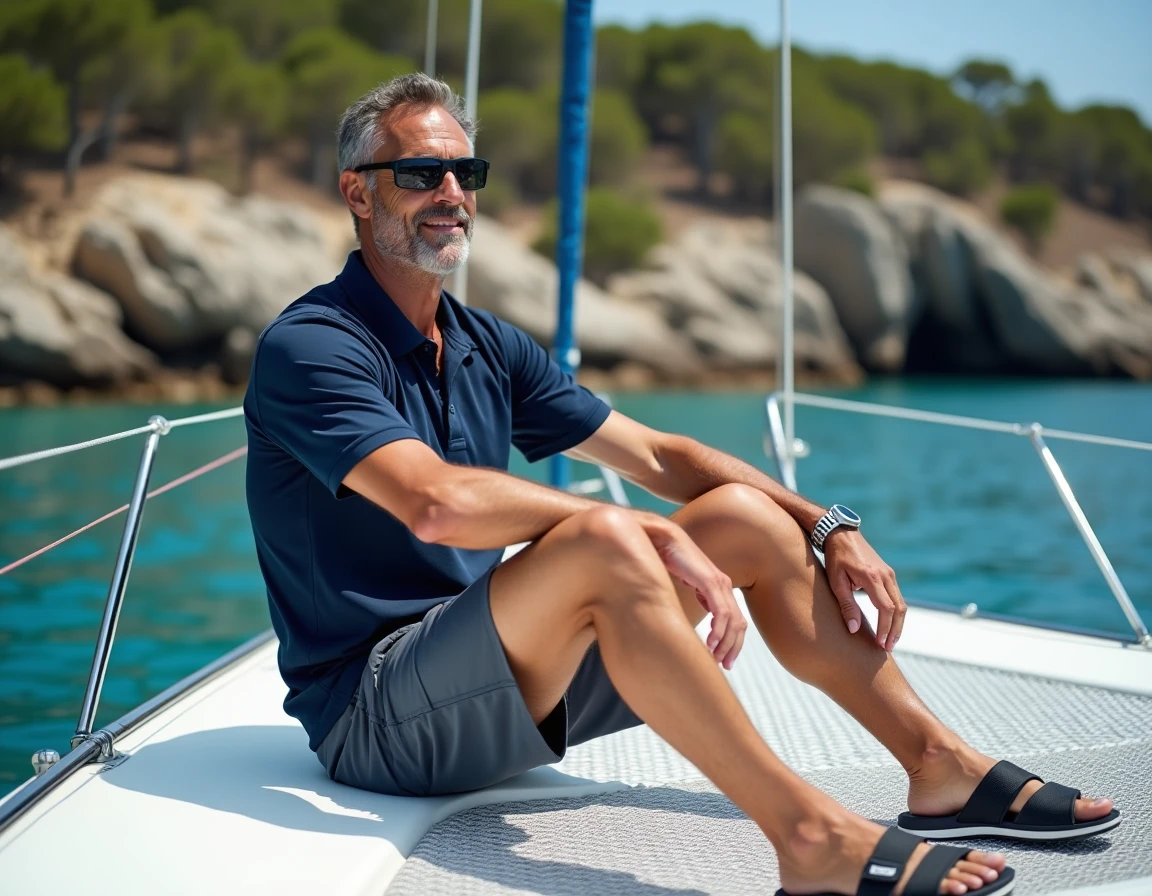
Flip-flops slip on a wet deck and get caught in the ropes. Shoes with black soles leave marks on the gelcoat (the surface of the deck), which catamaran rental companies consistently report. Regular sneakers absorb water and take hours to dry in the confined space of a cabin.
Catamaran attire for the evening: the sunset dress code and its constraints
Sunset cruises on catamarans, increasingly popular, add a clothing dimension that purely technical guides overlook. Some operators, particularly in tropical areas like Réunion or Martinique, recommend “smart casual” attire for cocktail outings at the end of the day.
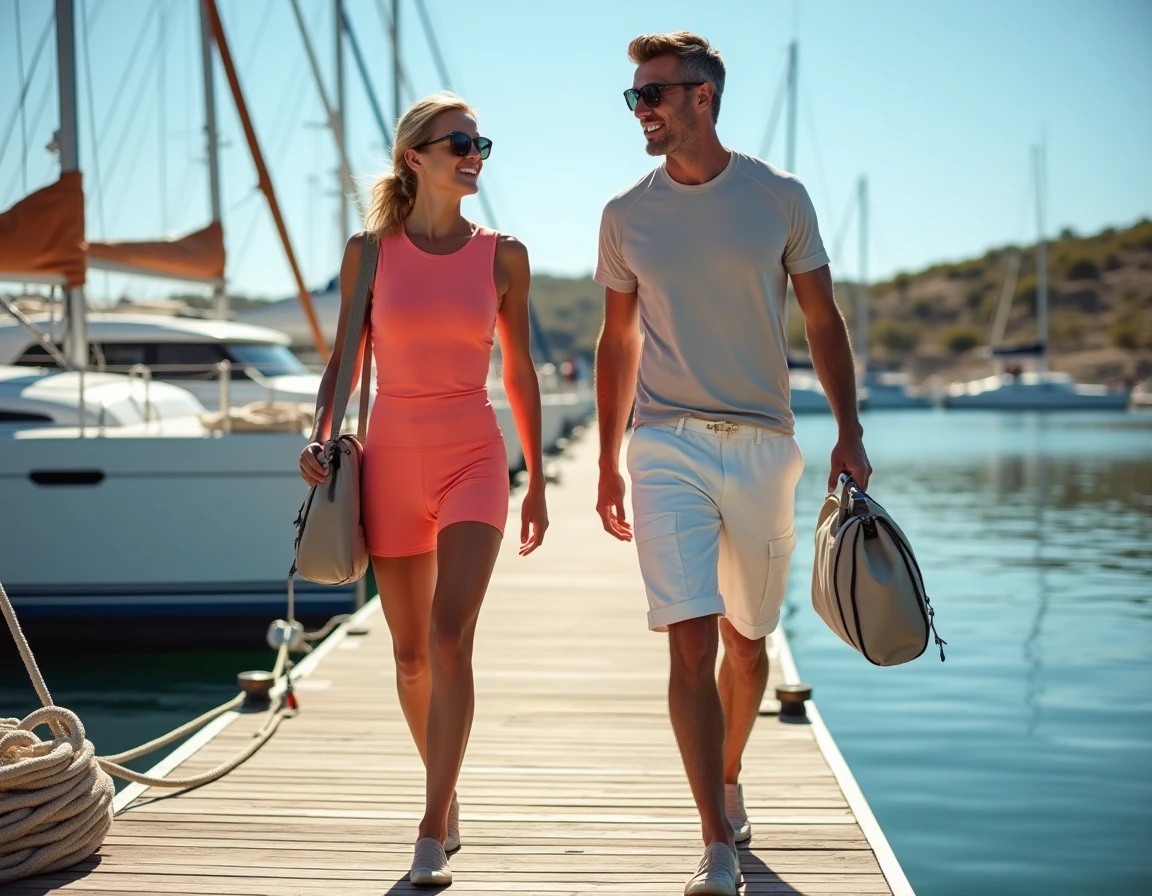
The challenge is to transition from sailing attire to a presentable silhouette without access to a wardrobe. A lightweight synthetic quick-drying pant, worn with a clean top kept dry in a waterproof bag, is sufficient in most cases. Coordinated outfits in linen or lightweight cotton, very visible on social media under the hashtag “boat outfit,” work well at the stop but do not handle splashes well during sailing.
Planning for a dry outfit in a waterproof bag resolves most situations. A bag of a few liters protects a top, bottom, and spare underwear from saltwater and spray.
Adapting your outfit to the duration of the catamaran outing
A two-hour sail on a sport catamaran does not require the same gear as a multi-day cruise. For a short outing in summer, a swimsuit, a lycra, and water shoes cover the needs. Layering becomes relevant once you exceed half a day or sail out of season.
Long sailing: the windproof layer changes everything
On a full-day outing or longer, a waterproof and breathable windbreaker transforms comfort on board. Even in the Mediterranean in summer, the perceived temperature drops significantly in the late afternoon when the wind picks up. Field reports vary on the necessity of waterproof pants in summer, but a lightweight packable jacket is a consensus among regular practitioners.
- Short outing (less than three hours, summer): swimsuit, UV lycra, hat, water shoes
- Day outing: add a mid-layer like a thin fleece and a windbreaker
- Multi-day cruise: plan for two sets of technical clothing, a full rain suit, and dry clothes for stops
The storage volume on a catamaran is limited. Soft bags fit into cabin lockers, where a hard suitcase simply won’t fit. Favoring a soft bag and compressible clothing makes life on board easier as much as the choice of materials.
The ideal outfit for a catamaran does not exist in a one-size-fits-all version. It depends on the duration, destination, and type of outing. The common thread remains the same: quick-drying materials, textile sun protection, shoes suitable for the deck, and a waterproof bag to keep a change of clothes dry.