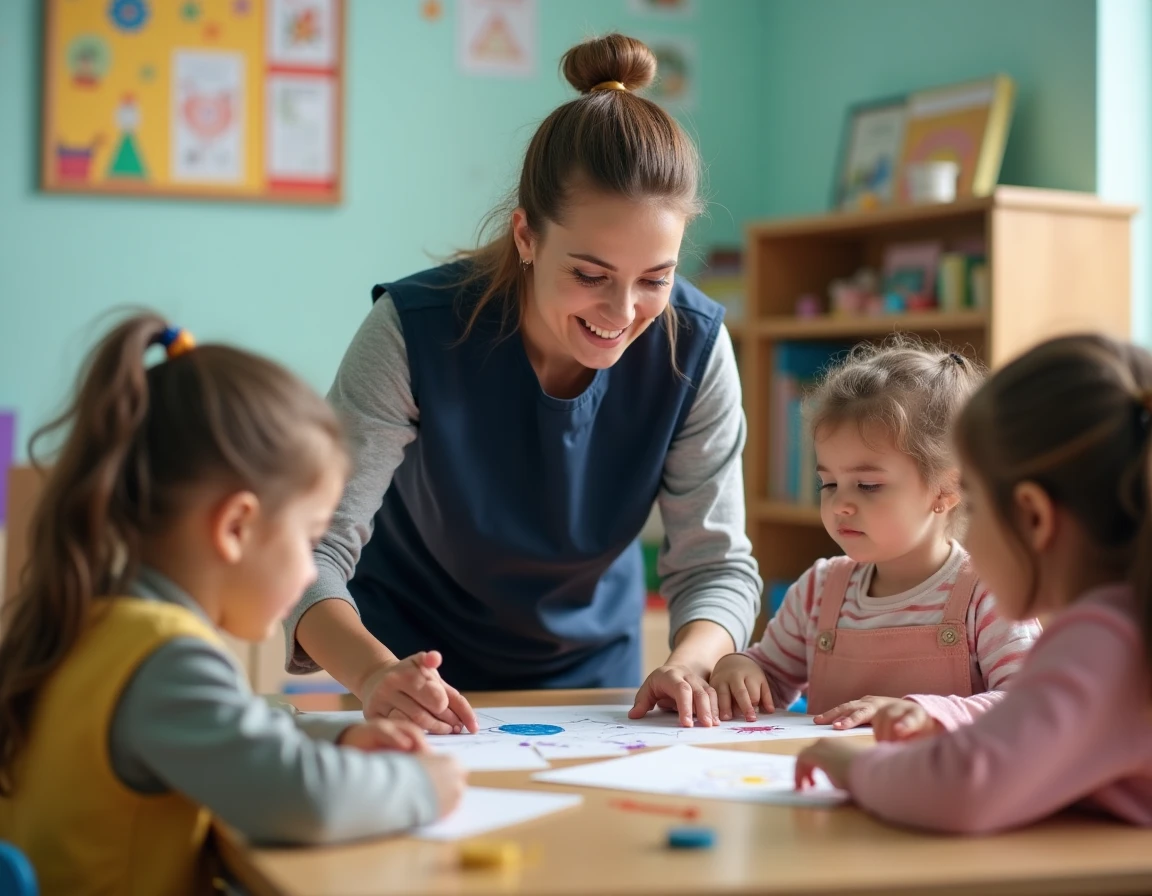
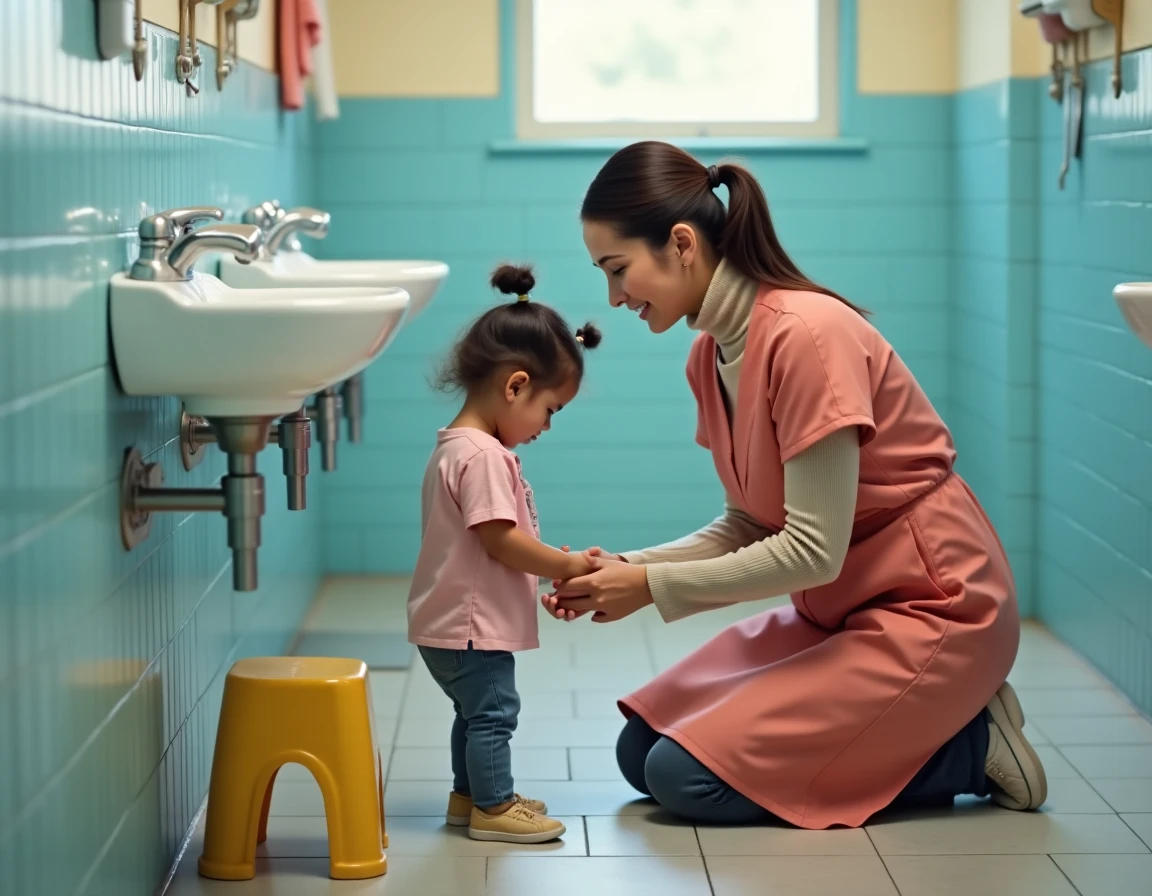
In preschool, an adult in a smock helps children put on their coats, prepares the paint, and accompanies them to the restroom. This adult is the ATSEM, a specialized territorial agent for preschool education. But is their presence in the classroom guaranteed by law, or does it depend on the goodwill of the municipality? The answer lies in an old regulatory text, the interpretation of which still varies today depending on the municipalities.
Article R. 412-127 of the Code of Municipalities: the text that establishes the obligation
The regulatory foundation dates back to May 16, 1981. Article R. 412-127 of the Code of Municipalities states that an ATSEM is assigned to each preschool class. The term used is clear: “every preschool class must benefit” from this agent.
This text does not specify the number of hours or the distribution throughout the day. It establishes a principle, not a schedule. It is this imprecision that opens the door to local interpretations.
In practice, the question of the mandatory presence of an ATSEM in the classroom arises each year in municipalities where human resources are limited. Some municipalities assign an ATSEM only in the morning. Others share them between two classes. The text does not explicitly prohibit this, creating a persistent ambiguity.
Preschool classes and kindergarten classes: a blurred distinction that poses a problem
You may have heard about “preschool classes” without knowing what distinguishes them from traditional kindergarten classes. In fact, a preschool class accommodates preschool children within an elementary school, often in rural areas, when the number of students does not justify a separate preschool.
The problem is that Article R. 412-127 mentions “preschool classes” without naming “preschool classes.” This omission leads some municipalities to consider that the obligation does not apply to these mixed classes.
The question was raised in the Senate by Bernard Buis, in a written question published on November 28, 2024. The senator from Drôme explicitly asks the Minister of National Education to clarify whether preschool classes should benefit from an ATSEM just like preschool classes. His approach highlights that in rural areas, children aged three to five sometimes find themselves without an ATSEM due to the lack of a clear legal framework.
Why this distinction persists
The Code of Municipalities has not been reformed on this point since 1981. Subsequent texts (circulars, ministerial responses) have not provided binding resolutions. Each municipality interprets the text according to its resources and legal interpretation.
A school principal in a rural area requesting an ATSEM for their preschool class may encounter a refusal justified by this textual ambiguity. The teacher then finds themselves alone with about twenty children aged three to six, without assistance for daily tasks.
Presence time of the ATSEM: what the regulations do not specify
Even when an ATSEM is properly assigned to a class, nothing in the text guarantees that they will remain there all day. In the National Assembly, a written question from Daniel Labaronne (question no. 904, 16th legislature, published in 2023) questions the minister about the required presence time of ATSEMs in class.
The reality on the ground varies considerably:
- Some municipalities provide a full-time ATSEM during school hours, morning and afternoon.
- Others limit their presence to mornings, believing that the afternoon falls under a different arrangement (supervised nap by an unqualified agent, for example).
- In small municipalities, the same ATSEM may be shared between two or even three classes, reducing their effective presence in each.
The report from the General Inspectorate in July 2017 on the missions of ATSEMs notes that nearly 50,000 agents work in preschool or kindergarten classes, with about 5,000 “acting” who do not always hold the CAP Early Childhood qualification. This reality reflects significant disparities between well-equipped municipalities and those under budgetary pressure.
Pedagogical role of the ATSEM: much more than a maintenance agent
ATSEMs have long been seen as “service women,” confined to cleaning and hygiene. This view has been outdated for years. The 2017 report from the General Inspectorate emphasizes that their missions increasingly fall within the educational domain.
In practice, an ATSEM prepares teaching materials, supports small group workshops, and helps a child in difficulty complete an activity. Without an ATSEM, the teacher cannot split the workshops or provide individualized support to the youngest.
A need reinforced by the upcoming 2026 programs
The new preschool programs planned for 2026 incorporate age benchmarks and education on emotional and relational life. This type of approach requires enhanced supervision, with more small group moments and individualized interactions.
These guidelines make the presence of a second qualified adult even more necessary. A teacher alone facing 25 children in the nursery section cannot conduct a workshop on emotions while supervising the rest of the group.
What to do when the municipality refuses to assign an ATSEM
This situation exists and is not rare. The teacher or school principal can report the lack to the National Education Inspector (IEN). They can intervene with the municipality, but do not have binding power over municipal decisions regarding territorial personnel.
Possible recourse for teaching teams:
- Contact the IEN in writing, referencing Article R. 412-127 and describing the concrete impact on the class.
- Alert the representatives of the parents of students, who can address the municipal council.
- Request arbitration from the Defender of Rights if the situation jeopardizes safety or equal access to public educational services.
The law mandates one ATSEM per preschool class, but does not provide any penalties for non-compliance. This is the central paradox of this regulation: the obligation exists on paper, but its implementation depends on the political will and finances of each municipality. As long as the legislator does not clarify the exact scope of this obligation (preschool classes, duration of presence, penalties), disparities between territories will continue to impact the daily lives of teachers and children.